
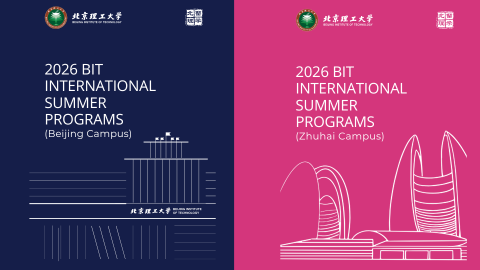
Students are invited to apply for the 2026 International Summer Program at Beijing Institute of Technology (BIT), held on-campus in China.
Seven programs are available this summer:
- Hands-on Learning for Emerging Technologies in Electronics Engineering
- Frontiers of Materials Science for Renewable Energy
- Smart Chinese: AI-Empowered International Chinese Learning and Cross-Cultural Communication
Beijing Application: http://apply.isc.bit.edu.cn/
- Artificial Intelligence
- Intelligent Robotics Engineering
- Global Leadership
- Smart Vehicle and Technology
Zhuhai Application: http://applyisc.bitzh.edu.cn/
Duration: July 8 – July 29, 2026
Deadline to apply: May 15, 2026
BIT is offering 10 scholarships for the On-campus program at both campuses
BIT Scholarship covers Tuition, on-campus accommodation, teaching materials, insurance, culture tours and lab work. Students only need to bear the expenses for international travel and meals during they study in China.
If you are interested in participating in this summer program, please send an email before April 29 to fib.rel.int@upc.edu with the following information so that nominated students can be submitted to BIT:
• Name and surname
• Passport number
• Nationality
• Name of the course you are interested in
More information: 2026 BIT (Beijing Campus) and 2026 BIT (Zhuhai Campus).
ATTENTION: If you are accepted in the course and you would like to get academic recognition on your degree’s academic record for having carried out this activity, it is essential that, at least a couple of months before attending the course, you send an email to fib.rel.int@upc.edu , and we will assess whether or not recognition is possible. Be aware that the vast majority of Winter/Summer Schools do not offer academic recognition, and the courses with credit recognition results in a lower amount of ECTS than those proposed in the information leaflets.


